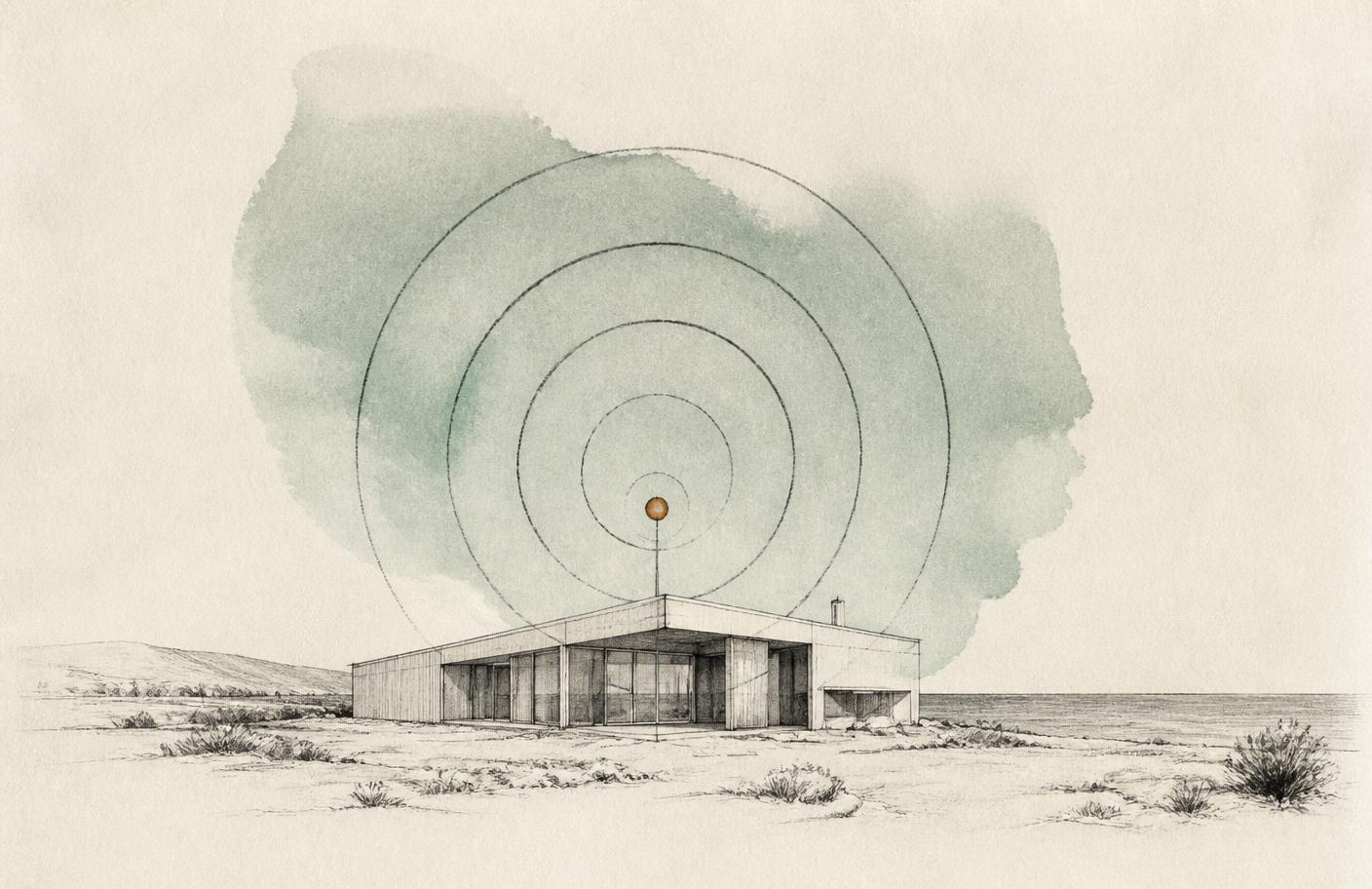
Systems we monitor
For decades, organisations have invested heavily in understanding the condition of their physical assets.
Mechanical systems are monitored.
Electrical systems are monitored.
Water systems are monitored.
Energy systems are monitored.
Fire systems are monitored.
Security systems are monitored.
Modern Facility Management has become remarkably good at making invisible mechanical problems visible before they become failures.
Predictive maintenance transformed the way organisations manage assets. Instead of waiting for equipment to fail, we increasingly monitor condition, identify trends and intervene before breakdowns occur.
Today, this way of thinking is considered normal.
The system we do not monitor
Yet there is another operational system that quietly influences the health, resilience and performance of almost every building.
Biology.
Unlike mechanical systems, biology rarely appears on operational dashboards. Instead, it usually becomes visible only after something has already gone wrong.
A mould outbreak.
A termite infestation.
Rodent activity.
Poor indoor air quality.
Microbial growth within HVAC systems.
Water damage that quietly developed over months before becoming visible.
These are typically managed as separate maintenance issues.
But perhaps they are not separate at all. Perhaps they are different expressions of the same underlying biological processes interacting with our built environment.
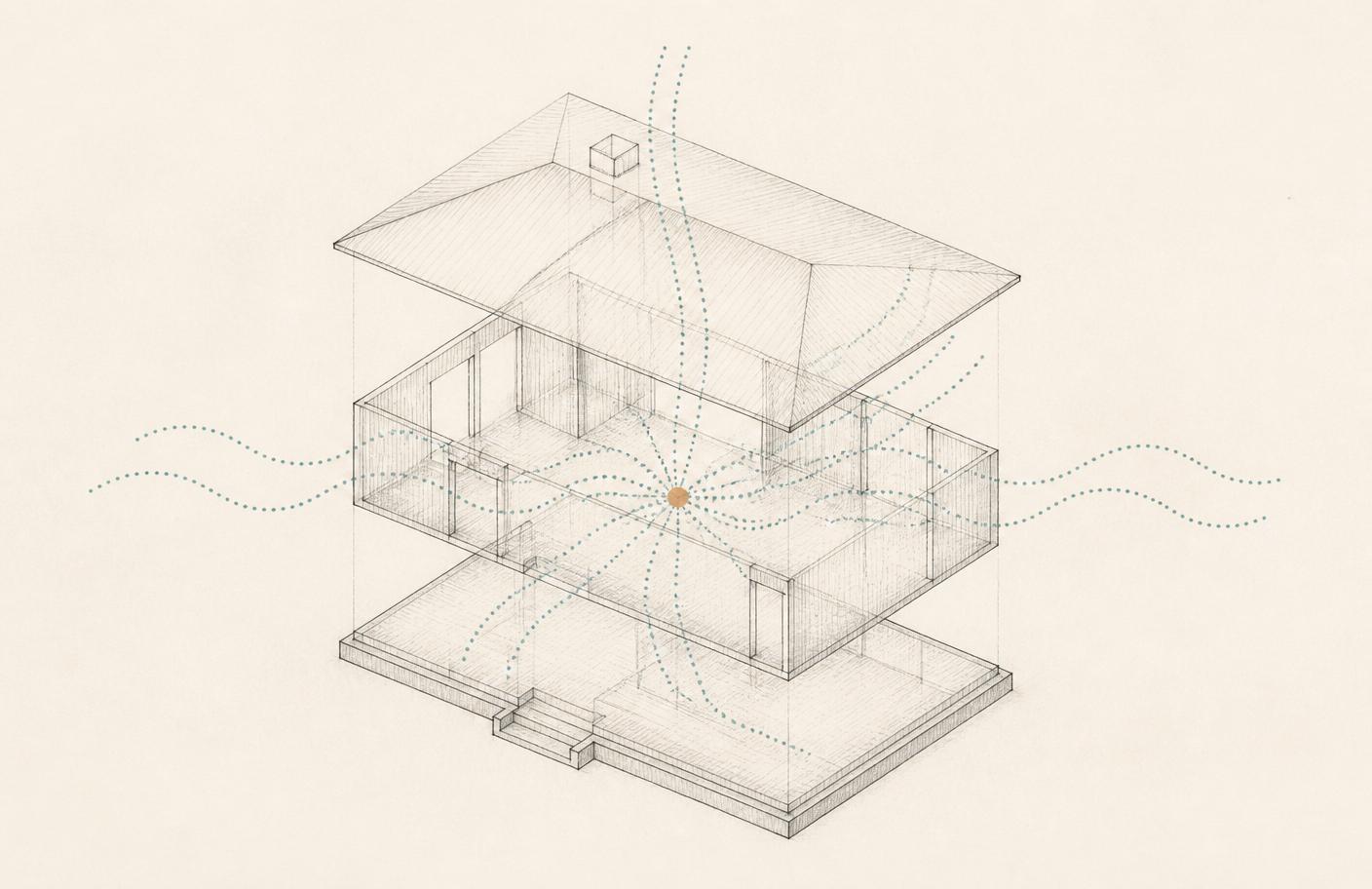
A different question
That possibility raises an interesting question. If predictive maintenance transformed the management of mechanical assets, what happens when we begin applying the same thinking to biological systems?
Mechanical systems rarely fail without warning. They usually exhibit measurable changes before failure occurs.
Temperature. Vibration. Pressure. Energy consumption. Wear.
Engineers have become exceptionally good at recognising these signals.
Could biological systems behave in a similar way?
Could changing moisture levels, thermal anomalies, ventilation patterns, occupancy, environmental conditions and microbial activity provide measurable indicators of future biological risk?
Rather than asking how do we remove mould, perhaps we should first ask why the conditions for mould existed in the first place.
Rather than asking how we eliminate termites, perhaps we should ask what environmental conditions made this building biologically attractive long before termites arrived.
Those are fundamentally different questions.
The technologies already exist
One reason this fascinates me is that many of the enabling technologies already exist.
Thermography. Moisture sensing. Indoor Air Quality monitoring. GIS. Remote sensing. Smart pest monitoring. Building Management Systems. Artificial Intelligence.
Individually, each provides only part of the picture.
Together, they may offer something much more significant.
Not simply better inspections. But a deeper understanding of the biological condition of physical assets.
Interestingly, adjacent industries are already moving in this direction. Precision agriculture increasingly combines environmental sensing, remote sensing, historical datasets and AI to predict biological risk before significant crop damage occurs.[1][2] Similar predictive approaches are becoming standard in mechanical maintenance and industrial operations.[4]
This naturally leads to another question.
If agriculture can become increasingly predictive...
If engineering can become increasingly predictive...
Why shouldn't the biological condition of buildings become increasingly predictable as well?
A working definition
I have been exploring this idea under a working concept that I currently call Biological Asset Intelligence.
Biological Asset Intelligence is the discipline of understanding, monitoring, modelling and predicting the biological condition of built environments through integrated sensing, environmental data and operational intelligence.
Whether that definition ultimately proves useful remains to be seen.
Like many new ideas, it will either become stronger through discussion—or be challenged and improved. Both outcomes are valuable.[3]
An invitation
This essay is not intended to provide answers. It is an invitation to ask better questions.
Over the coming months I will be exploring thermography, moisture diagnostics, indoor environmental quality, GIS, remote sensing and other sensing technologies—not as isolated disciplines, but as complementary ways of understanding the invisible biological processes that quietly influence our buildings every day.
I suspect this journey will raise more questions than it answers.
That seems like a good place to begin.